

Lithium-ion batteries are now part of everyday life.
From laptops and power tools to e-bikes, EV equipment and industrial batteries, they are being used across almost every workplace.
But the risk they create isn't the same in every sector.
A battery stored in an office presents a very different challenge from batteries used on a construction site, in a warehouse or across a manufacturing facility.
So, what should different sectors actually be thinking about?
Offices & Commercial Buildings
Laptops, phones, tablets, e-bikes, scooters and portable power equipment can all end up being charged or stored within the workplace.
The challenge is often that batteries are treated as ordinary electrical equipment.
A damaged or overheating lithium-ion battery can rapidly become a fire risk.
Consider:
- Where are batteries being stored?
- Where are they being charged?
- What happens to damaged or swollen batteries?
- Do employees know what signs of battery damage to look for?
A designated, controlled storage area can help reduce the risk of batteries being left in unsuitable locations.
Education
Schools, colleges and universities increasingly have batteries throughout their buildings.
Laptops, tablets, e-bikes, scooters, maintenance equipment and other portable devices can create a difficult storage problem, particularly where large numbers of students or staff use them.
The challenge isn't simply having batteries on site. It's managing where they are stored, charged and what happens when one becomes damaged.
Clear procedures and designated storage can form part of a wider battery safety strategy.
Manufacturing & Production
Manufacturing environments can introduce additional risks.
Batteries may be used in tools, machinery, inspection equipment, vehicles and production processes.
There can also be damaged batteries that need to be temporarily isolated before they can be removed from site.
For Health & Safety and Operations teams, the key question becomes:
What happens when a battery is damaged?
Having a designated area for battery storage and quarantine can help prevent potentially damaged batteries from being left in general storage areas or alongside combustible materials.
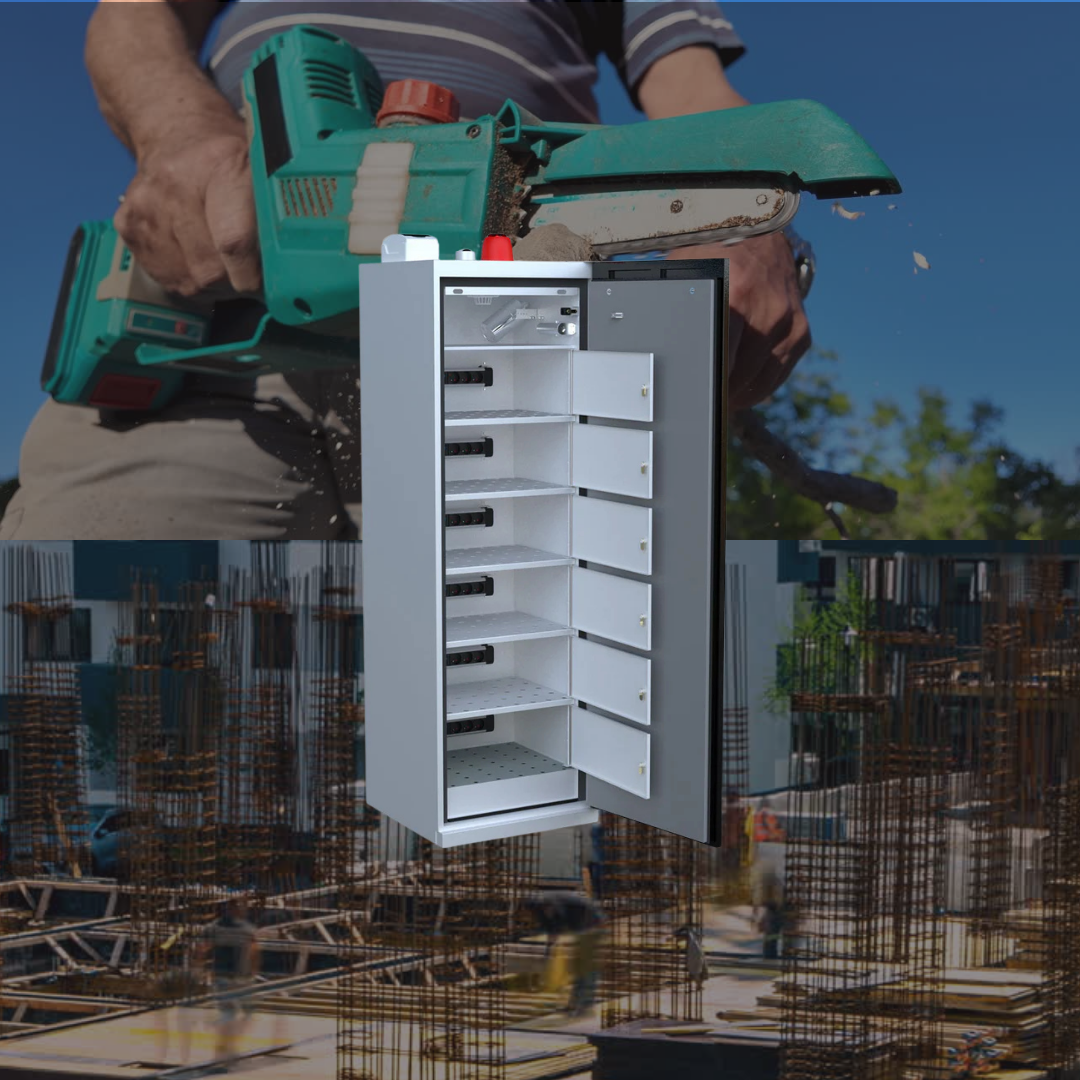
Construction
Construction sites rely heavily on cordless tools.
That means large numbers of lithium-ion batteries can be moving between site, vehicles, workshops and storage areas.
Batteries can also be exposed to impacts, water, extreme temperatures and rough handling.
A practical battery management approach should consider:
- Storage between shifts
- Charging locations
- Transportation around site
- Damaged batteries
- Temporary storage before disposal
- Staff awareness
For construction teams, battery safety needs to work in the real world, not just on paper.
Warehousing & Logistics
Warehouses may store batteries as part of their inventory, use battery-powered equipment or have employees bringing personal devices onto site.
The scale can make battery management particularly important.
A small number of batteries in an office is one thing.
Hundreds or thousands of batteries in a warehouse environment are a very different proposition.
Segregation, storage and emergency procedures all become increasingly important as battery volumes increase.
🛴 Leisure, Hospitality & Public-Facing Environments
E-bikes, e-scooters and portable electronics are becoming increasingly common.
Hotels, leisure facilities, visitor attractions and other public-facing organisations may have customers or employees bringing lithium-ion battery-powered devices onto their premises.
That creates a challenge:
How do you manage a risk that isn't entirely under your control?
Having clear rules around charging and storage and a suitable location for batteries that appear damaged, can help organisations manage that risk.
One Battery Safety Strategy Doesn't Fit Every Sector
The important thing is not simply buying a battery cabinet.
It's understanding how batteries are being used within your organisation.
Ask yourself:
Where are our batteries?
Where are they charged?
How many do we have?
What happens when one is damaged?
Who is responsible for managing them?
Do our current storage arrangements actually reflect the risk?
For some organisations, a designated lithium-ion battery cabinet can provide a controlled solution for storing batteries and managing the risks associated with them.
But the right solution depends on your environment, battery types, quantities and procedures.
Need help understanding your battery storage requirements?
Emtez can help you assess your current arrangements and identify practical ways to improve lithium-ion battery storage and safety.
Find out more about our lithium-ion battery storage solutions or speak to our team about your requirements. https://www.empteezy.co.uk/collections/lithiumvault-battery-cabinets
Share:
What can businesses learn from a £900k environmental fine